The automotive industry is undergoing a silent transformation. More and more vehicles continue to evolve well after leaving the factory. They adapt, improve, and gain new capabilities through embedded software updates, often deployed Over-the-Air (OTA). This approach lies at the heart of the Software Defined…
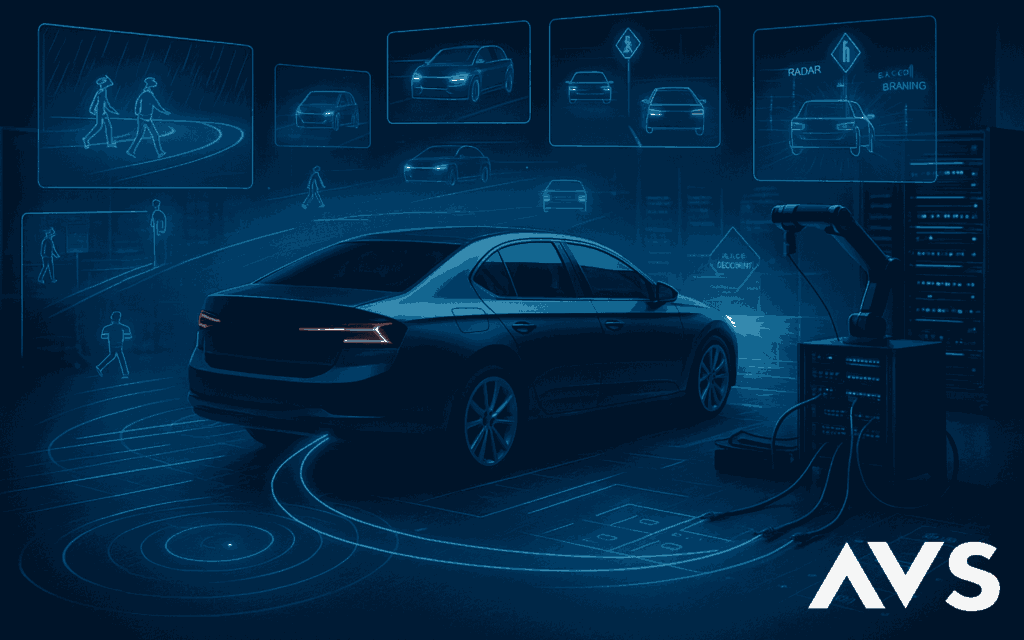
Developing Advanced Driver Assistance Systems (ADAS) comes with increasing testing challenges: detecting a pedestrian in poor lighting, anticipating a side collision, merging into dense traffic… These are all scenarios that are difficult — and sometimes dangerous — to reproduce on real roads. This is where…
As Advanced Driver Assistance Systems (ADAS) become more complex, their validation must cover a vast and growing range of driving situations. Whether it’s an unexpected obstacle, degraded weather conditions, or a human behaving unpredictably, each scenario poses a challenge that must be anticipated during development….
In modern vehicles, advanced driver-assistance systems (ADAS) are built on a fundamental principle: see, understand, and react to what happens around the vehicle. This real-time perception is made possible by embedded sensors — cameras, radars, lidars — that continuously monitor the environment. But as ADAS…
Artificial intelligence (AI) has long been considered a future technology for the automotive world. Today, it’s presented as a central building block for autonomous vehicles, offering the ability to understand complex environments, make fast decisions, and continuously learn. But in practice, how mature is in-vehicle…
Advanced Driver-Assistance Systems (ADAS) are now standard in most modern vehicles: automatic emergency braking, lane keeping, adaptive cruise control, blind spot detection… All of these systems rely on accurate perception and rapid reaction. But their true performance is also shaped by a sometimes overlooked factor:…
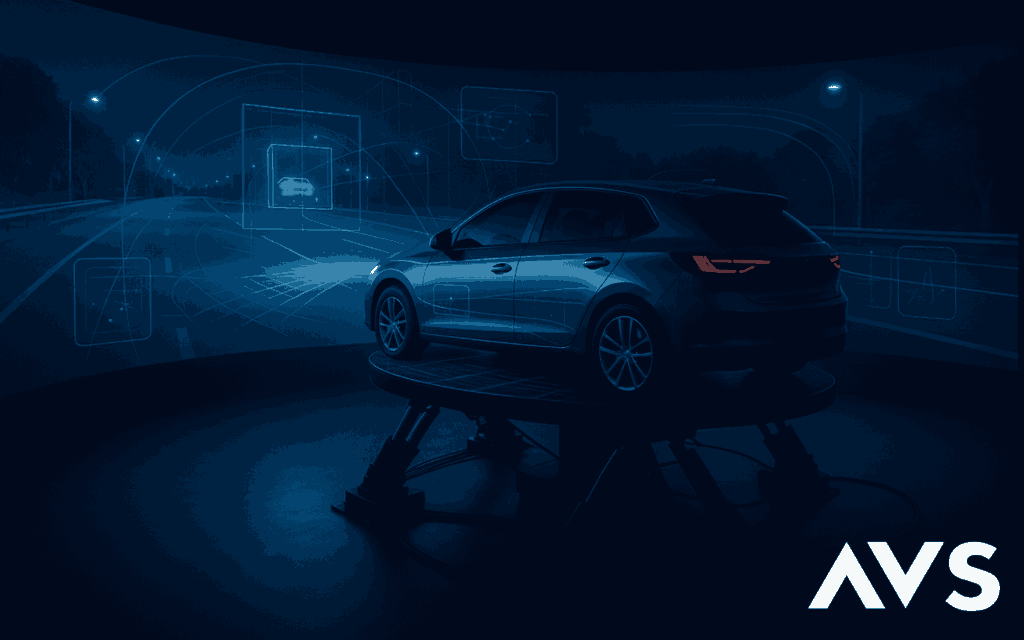
In the automotive industry, every line of embedded code, every actuator, and every safety-critical function must go through rigorous testing and validation. As complexity increases, so does the need for tools that ensure reliable, repeatable, and realistic test environments. This is where Hardware-in-the-Loop (HIL) comes…
The rise of the Software Defined Vehicle (SDV) is reshaping the automotive industry. It’s not just about adding an operating system or enabling over-the-air updates it’s about redefining how vehicles are architected, developed, validated and maintained. And in this shift, simulation is becoming essential. SDVs…
In the world of intelligent vehicles, headlights are no longer just basic lighting systems. They’ve become adaptive, dynamic functions, capable of adjusting their shape, intensity, and range in real time based on traffic, weather, and road geometry. We now refer to these as Intelligent Headlights….
As vehicle systems become more complex, connected, and safety-critical, validating their behavior under all conditions is no longer optional, it’s essential. Whether you’re testing a lane keeping assistant, a thermal management controller, or a complete ADAS module, virtual testing has become a central pillar of…